Cristina Negri: Il tuo nuovo album, Requiem for a Village, è nato quasi come uno zoom su un dettaglio specifico del tuo precedente lavoro a tema spaziale, The Overview, oppure si tratta di una storia completamente distinta e a sé stante?
Steven Wilson: Beh, ogni cosa è al contempo una continuazione e una reazione rispetto a ciò che l’ha preceduta. Quindi, con questo album mi sono chiesto: “Cosa posso fare che sia completamente diverso da The Overview, che sorprenda gli ascoltatori e che mi entusiasmi al punto da voler realizzare un disco?”. È una sorta di reazione… detto così potrebbe sembrare una cosa negativa, ma in realtà è più una questione di voler andare oltre e fare qualcosa di diverso. E credo che l’aspetto di cui vado più fiero, in particolare nella mia discografia da solista, sia proprio il fatto che ogni album sia diverso dagli altri. Ogni singolo album, e ne ho realizzati nove finora, è unico. Penso che ognuno abbia il suo preferito, ma ogni disco ha una sua ragione d’essere all’interno della mia produzione.
Si trattava quindi di chiedermi cosa potesse rappresentare una sfida per me, cosa potesse motivarmi a dedicare altri sei mesi alla creazione di un nuovo disco. Ma c’entra anche il momento storico che stiamo vivendo: dall’uscita di The Overview, l’intelligenza artificiale è diventata un tema di grande attualità per tutti. Volevo realizzare un disco che fosse quasi una sorta di “anti-risposta”, una reazione proprio nei confronti dell’intelligenza artificiale.
Cristina Negri: E qual è stata la scintilla iniziale che ti ha spinto a creare Requiem for a Village? Il primo spunto, la prima curiosità, qualcuno o qualcosa di cui ti hanno parlato, dato che hai iniziato a registrare in estate, nel bel mezzo del tour di The Overview?
Steven Wilson: Credo sia nato semplicemente dal fatto che ho ricominciato a interessarmi a film e libri del filone “folk horror”; non saprei spiegarti esattamente il perché. Ma sai, a volte nella vita attraversiamo delle fasi, dei periodi in cui ci sentiamo fortemente attratti da qualcosa in particolare. Mi sono riavvicinato al folk horror e ho guardato un film intitolato Requiem for a Village: un film britannico davvero molto oscuro, che ho trovato sul sito del British Film Institute. Il titolo mi piaceva moltissimo.
È un’opera realizzata cinquant’anni fa, nel 1976, e tratta di come il mondo moderno stesse erodendo molte delle tradizioni delle piccole comunità rurali; un tema che, probabilmente, è ancora più attuale nel 2026 di quanto non lo fosse nel 1976. L’idea stessa di creare un brano musicale intitolato Requiem for a Village mi ha colpito: quel titolo, in un certo senso, è stato il punto di partenza.
Cristina Negri: Ha suscitato una risposta in te.
Steven Wilson: Sì, ho pensato che sarebbe stato fantastico scrivere un brano che fungesse da requiem per un modo di vivere ormai passato: uno stile di vita più innocente, più naturale, ma che ha ancora molto da dirci oggi. Nell’era dell’intelligenza artificiale, dei social media e di Internet, credo che questo modo di vivere abbia molto da insegnarci.
Cristina Negri: Questo si ricollega a un’altra mia domanda, che parte, ovviamente, da una mia interpretazione. Nel primo singolo che hai pubblicato, Requiem for a Village, sembra emergere una sorta di critica alla vita di provincia, che si trasforma in un duro sfogo, in parte dovuto al peso claustrofobico della tradizione. Ci ha colpito in particolare questo passaggio: “Living in the country we’re all fucked up, all dressed up like monkeys, we breed like dogs”, eccetera. Ce ne vuoi parlare?
Steven Wilson: Vedi, non credo necessariamente che sia un aspetto negativo. Anzi, la cosa mi piace. Quel brano racconta dei personaggi bizzarri ed eccentrici che popolano il villaggio, di quelle vite pittoresche che danno forma al villaggio, alla realtà di provincia. Hanno le loro usanze, le loro tradizioni, il loro stile di vita, la loro religione; spesso, in alcune di queste piccole comunità, si tratta di credenze che precedono il Cristianesimo, risalenti a secoli o addirittura millenni fa. Si tratta quindi dell’idea di piccole comunità che conservano rituali, tradizioni e usanze singolari e che, secondo i canoni della vita moderna, appaiono piuttosto… “scombinate”. Ma non credo che sia necessariamente un male. Per me, sono proprio le eccentricità, le stranezze e le imperfezioni di queste persone a renderle interessanti, così come rendono interessante una piccola comunità. Sono quelle piccole “soap opera” che si consumano all’interno di questi centri abitati.
E la cosa mi piace. È una delle cose che mi mancano molto di ciò che c’è nella vita moderna, come l’omologazione e la globalizzazione di… beh, di ogni aspetto: l’informazione, la personalità. Così, ho immaginato tutti questi personaggi strani ed eccentrici del villaggio. È un aspetto che accolgo con favore; mi piace, mi piace davvero.
Cristina Negri: E probabilmente l’ultima domanda riguarda proprio questo, dato che ogni tuo album è un viaggio che richiede tempo e attenzione per essere assimilato appieno. Quando gli ascoltatori arrivano alla fine dell’ultimo brano di Requiem for a Village e si ritrovano seduti nel silenzio della propria stanza, con quale sensazione, dubbio o interrogativo speri che si trovino a confrontarsi?
Steven Wilson: È un’ottima domanda. Credo di essere arrivato al punto in cui ho completato il quadro e ora faccio un passo indietro per cercare di capire io stesso cosa sia; e non lo so. L’album si chiude con un momento molto inquietante, per poi tornare a una giornata estiva di campagna idilliaca e meravigliosa, con il canto degli uccelli, le biciclette… E credo che l’idea di fondo sia questa: anche se il villaggio è un luogo bellissimo, idilliaco e accogliente, vi accadono cose davvero spaventose e inquietanti, per i motivi di cui abbiamo parlato. Ma, in ultima analisi, tutto torna a essere quella giornata estiva meravigliosa, accogliente e idilliaca: il canto degli uccelli, la gente che pota le siepi… È un aspetto ambiguo.
Cristina Negri: È ambiguo, sì.
Steven Wilson: E credo sia proprio questo a piacermi.
Cristina Negri: Ho riletto Under Milk Wood quando ho saputo che ti è stato di ispirazione per parte della narrazione; penso in particolare al Reverendo Eli Jenkins di Under Milk Wood, a Lareggub… non so bene come si pronunci…
Steven Wilson: Nemmeno io.
Cristina Negri: … “Non siamo né del tutto cattivi né del tutto buoni; la compassione per l’umanità è il sentimento prevalente in Under Milk Wood”. È una questione di equilibrio: non è né un bene né un male, ma siamo tutti parte dello stesso villaggio. (ride)
Steven Wilson: Sì, assolutamente. E credo che… beh, la musica sia ambigua. È allegra, inquietante, spaventosa, bellissima. Sai, in un certo senso, tutti i miei dischi sono una combinazione di questi elementi. E penso che, quando si parla di musica, a volte questi concetti siano più difficili da accettare e comprendere per le persone. Se si trattasse di un film, di un libro o di un dipinto, accetterebbero subito l’idea che un’opera possa essere spaventosa ma allegra, rabbiosa ma anche nostalgica, e così via. Ma con la musica, a volte è difficile accettare che possa essere contemporaneamente allegra, triste, spaventosa, accogliente, nostalgica, rabbiosa, gioiosa.
È difficile da capire per la gente. Ed è proprio questo che mi piace. Amo l’idea della musica intesa come una sensazione cinematografica fatta di contraddizioni e ambiguità.
Cristina Negri: Grazie mille, Steven. Grazie davvero.
Steven Wilson: È un piacere, sempre.
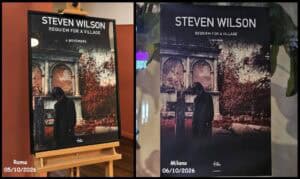
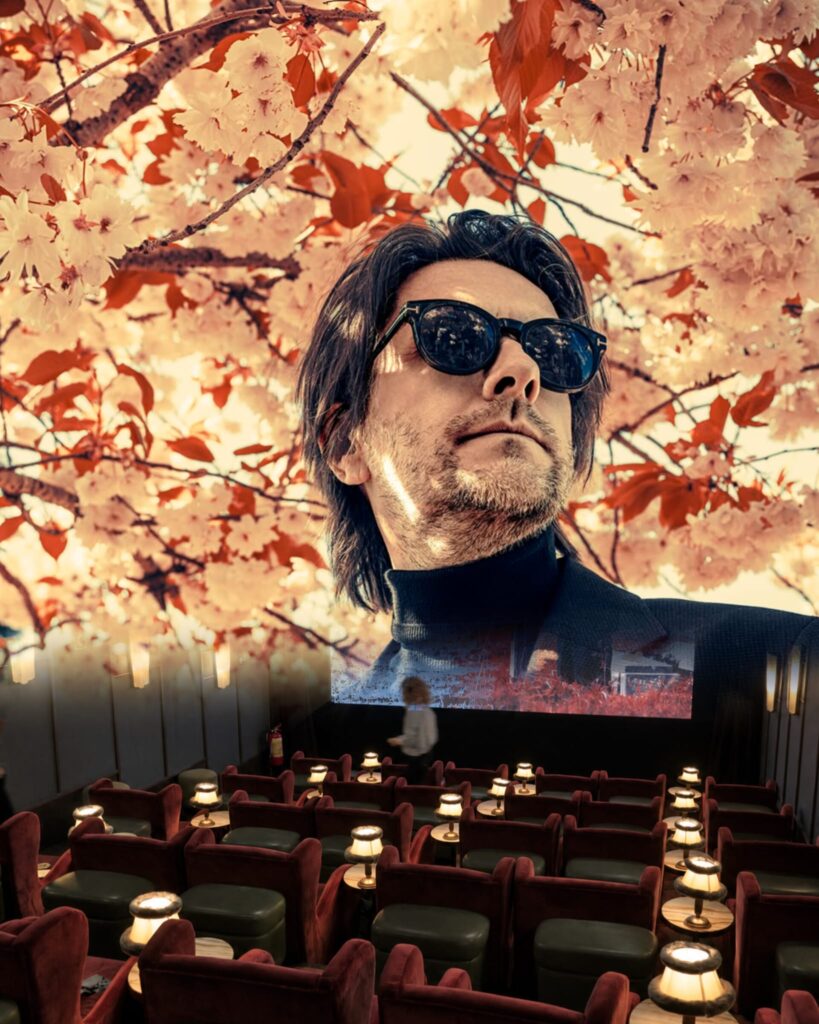
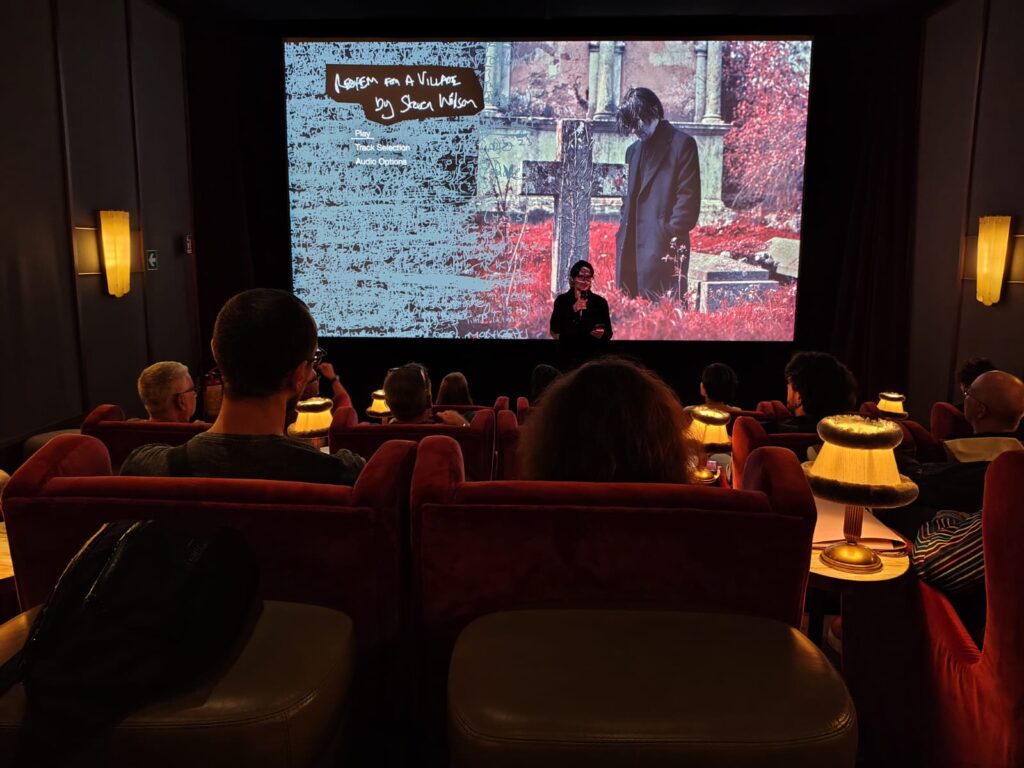
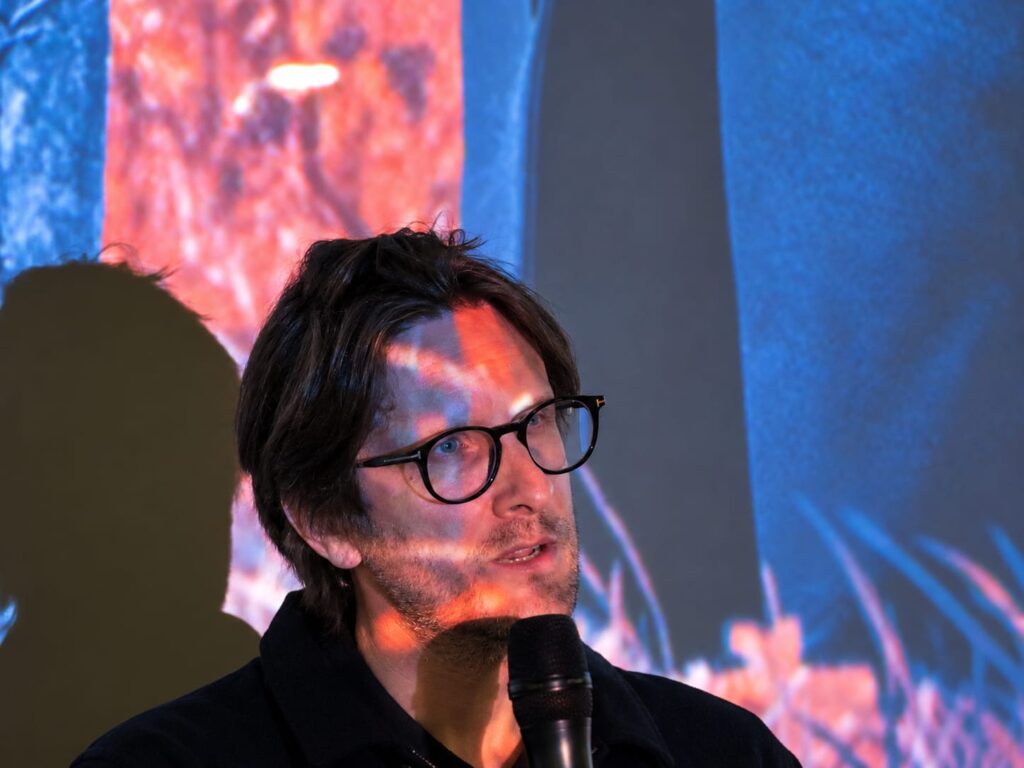
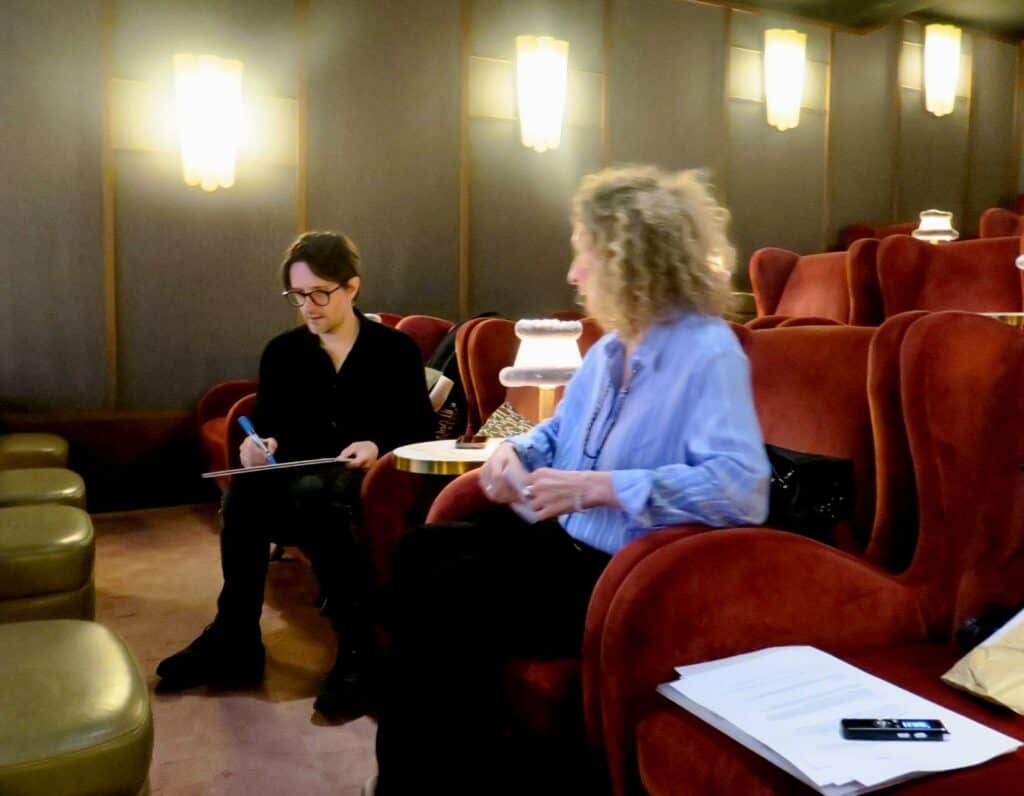
Intervista del fan club italiano di Steven Wilson a cura di Cristina Negri, registrata da Evaristo Salvi, editing di Cristina Negri e Domizia Parri, foto della serata di Annamaria Parente. Roma, 5 ottobre 2026, prima dell’ascolto in anteprima del nuovo album Requiem for a Village.
English version
AN INTERVIEW WITH STEVEN WILSON
Rome, 05.10.2026
Cristina Negri: Did your new album, Requiem for a Village, grow out as if zooming in on a specific detail from your previous space-themed album, The Overview, or is it a completely separate, self-contained story?
Steven Wilson: Well, everything is a continuation and a reaction against what came before. So, this album was really me asking myself: “What can I do that will be completely different to The Overview, that will surprise the listeners, and will excite me to want to make a record?” And so, it’s kind of a reaction against… that makes it sound like it’s a negative thing, but it’s more a question of wanting to move forward and do something different.
And I think what I’m most proud of, particularly in my solo catalog, is that every album is different. Every single album, and I’ve done nine now, and they’re all different. And I think everyone has their favorite, but every album has a reason to exist in the catalog.
So it was kind of like me asking myself what can I do that will be a challenge for me, that will motivate me to want to spend another six months making a new record. But it’s also because of the times we’re going through, and even since The Overview artificial intelligence has become a much bigger topic with everyone. So, it was wanting to make a record which would almost be like an anti… a reaction against artificial intelligence as well.
Cristina Negri: And what was the first thing that triggered you toward creating Requiem for a Village? The first hint, the first curiosity, someone, something that you were told of, since you started recording in the middle of the tour for The Overview during the summer.
Steven Wilson: I think it was just that I got back into folk horror movies and books, and I can’t explain to you exactly why that would be. But you know, in life, we sometimes go through these phases, periods in our life where we’re very attracted to a particular thing. I got back into folk horror and I saw a movie called Requiem for a Village. A very, very, very obscure British film that I found on a very obscure website, the British Film Institute website, and I watched it. I loved the title. And it was made 50 years ago this year, in 1976. And it was about how the modern world was eroding a lot of the traditions of smaller, village-based communities. Which is probably more relevant in 2026 than even it was in 1976. And I just thought the whole notion of creating a piece of music which was called Requiem for a Village was… that title in a way was the first thing.
Cristina Negri: It resonated.
Steven Wilson: Yeah, I thought it’d be great to write a piece of music which would be a requiem for an older way of life, a more innocent, a more organic way of life, and a way of life that, that has a lot to say to us now. In the age of AI and social media and the internet, this way of life, I think, has a lot to teach us.
Cristina Negri: And this is linked to the other question I have, and it is of course an assumption. In the first single you released, Requiem for a Village, a kind of critique of provincial life seems to emerge, which turns into a fierce tirade, partly through the claustrophobic weight of tradition. This passage in particular struck us: “Living in the country, we’re all fucked up, all dressed up like monkeys, we breed like dogs”, etc., etc. Could you tell us a bit about it?
Steven Wilson: You see, I don’t necessarily think that’s negative. I kind of like that. So, that song is all about the weird, eccentric characters that inhabit the village. The kind of colorful lives that make up the village, the provincial. They have their own customs, they have their own traditions, they have their own way of life, they have their own religion, you know, which very often, some of these religions in some of these small communities predate Christianity, they go back centuries, they go back millennia.
So, it’s that idea of these small communities having these weird kind of rituals and traditions and customs, and being, by the standards of modern life, pretty , messed up. But I don’t necessarily think that’s bad, you know.
But to me, the eccentricities, the quirks, the imperfections of these people are kind of what make them interesting, and it’s what makes a small community interesting. It’s the little soap operas that are happening in the smaller communities. And I like that. And that is one of the things I miss in a lot of modern life, due to the kind of homogenization and globalization of, you know, everything: information, personality. So, I was imagining all these kind of weird, eccentric characters in the village. I embrace that, I like, I like that.
Cristina Negri: And probably the last question is about this, because each of your albums is a journey that requires time and attention to fully process. When listeners reach the end of the final track of Requiem for a Village and find themselves sitting in the silence of their own room, what feeling, doubt, or question do you hope they’ll be left wrestling with?
Steven Wilson: It’s a very good question. I think I’m at the point now where I’ve painted the painting, and I’m kind of standing back now and trying to understand what it is myself, and I don’t know. The album finishes with a very scary moment and then it returns to a very idyllic, beautiful country summer day, with the birds singing, and the bicycles… And I think the idea is that even though the village is a very beautiful, very idyllic, very welcoming place, there’s some really scary, creepy shit going on.
For the reasons that we talked about. But ultimately, it goes back to being just this very beautiful, welcoming, idyllic summer, summer day, birds singing, people cutting their hedge… It’s ambiguous.
Cristina Negri: It’s ambiguous, yeah.
Steven Wilson: And I think that’s what I like about it.
Cristina Negri: I re-read Under Milk Wood when I heard that you were inspired by it for some part of narratives, and probably the Reverend Eli Jenkins in Under Milk Wood, in Lareggub, I don’t know how to pronounce it…
Steven Wilson: Neither do I.
Cristina Negri: …“We are not wholly bad or good, compassion for humanity is the prevailing sentiment in Under Milk Wood”. It is about the balance, not bad, not good, but we are all in the village. (laughs)
Steven Wilson: Yeah, absolutely. And I think, well, the music is ambiguous. It’s happy, it’s creepy, it’s scary, it’s beautiful. You know, like in a way, like all of all of my records are a combination of those things. And I think in music, sometimes these notions are harder for people to accept and understand. If it was a movie, or a book, or a painting, they instantly would accept that it’s scary but it’s happy, it’s angry but it’s also nostalgic, and all of these things. But in music, it’s hard sometimes for people to accept that music can be simultaneously happy, sad, scary, welcoming, nostalgic, uh, angry, uh, joyous. It’s hard for people to understand that. That’s what I love. I love to, I love the idea of the, the music as a cinematic feeling of contradictions and ambiguity.
Cristina Negri: Thank you so much, Steven. Thank you so much.
Steven Wilson: My pleasure, always.
Interview by Cristina Negri, recorded by Evaristo Salvi, editing by Cristina Negri and Domizia Parri, photo of the night by Annamaria Parente.